

The obvious low-maintenance choice isn’t automatically right for every UK garden. In the composite decking vs hardwood decision, the best fit depends on how you’ll use the space, the look you want, how much upkeep you’re prepared to do and whether your garden is exposed, shaded or prone to staying damp.
It’s understandable to want boards that stay attractive without becoming slippery, weathered or discoloured. But composite covers different formulations, whilst hardwood species each have their own grain and characteristics. Neither option is identical from one project to the next, so a sample alone won’t tell you everything.
This guide compares appearance, maintenance and performance in British conditions, with practical questions to ask about board specifications, layout and the subframe. Start with how you want to use the space, then consider which material and finished design suit your garden.
Key Takeaways
- Neither composite decking nor hardwood suits every garden. Your choice depends on the look you prefer and how you’ll use the space.
- Consider how shade, drainage, ventilation and exposure could affect the finished deck.
- Compare composite decking vs hardwood for appearance, colour and routine upkeep. Neither should be assumed to be maintenance-free.
- Use a practical decision process to weigh garden conditions, cleaning habits, intended use and design preferences.
- Before discussing your project with an installer, prepare questions about board specifications, deck design and subframe planning.
Composite Decking vs Hardwood: What Are You Really Comparing?
Neither composite nor hardwood is best for every garden or household. The right choice depends on the appearance you like, the care you’re prepared to give the deck and the conditions it will face outdoors. Comparing composite decking vs hardwood means weighing up a range of products and timbers, not two standardised materials.
Composite boards are manufactured from a blend of materials, whilst solid timber hardwood boards are cut from hardwood trees. That distinction matters, but it doesn’t describe the whole finished deck. Board specifications, the layout, subframe and installation also play a part.
What does composite decking contain?
Composite decking commonly combines wood fibres with polymers, though ingredients and manufacturing methods vary. Wood-plastic composites are a broader material category that includes products used for outdoor decking. Check the information for the specific board rather than assuming all composites have the same make-up or performance.
Solid composite boards differ from other constructions, such as hollow-profile boards, so confirm which type is being specified. Colour and surface finish vary too, from more uniform looks to finishes designed to suggest wood grain. Follow the care instructions for the exact product. Lower upkeep shouldn’t be mistaken for no upkeep.
What counts as hardwood decking?
Hardwood describes timber from broad-leaved tree species, not one consistent performance specification. Appearance, durability and maintenance needs can differ between species, and the timber’s source and supplied grade are worth checking. Ask which species are available for your project and request advice specific to that timber, rather than relying on a general claim about hardwood.
Natural grain and colour variation are part of timber’s character, but they also mean boards may not look identical. Ask the supplier or installer how the selected timber is expected to change outdoors and what care it needs. Don’t assume every hardwood will weather or respond to moisture in the same way.
There’s more to a finished deck than the boards you see. The layout should suit how you plan to use the space, and the subframe and installation need to be considered alongside the material. Drainage, ventilation and exposure can affect how the whole structure performs outdoors, so discuss the garden conditions as well as board choice.
P.Clark Decking & verandas installs solid composite and hardwood decking. Its team can work with you on a tailored design and suitable subframe construction. Before settling on a material, ask about the specific board, its finish and care guidance, and how it fits the planned build.
How Composite and Hardwood Decking Behave in British Weather
In a UK garden, repeated rain, damp spells and periods of sun can all affect a deck, but neither composite nor hardwood is weatherproof. How boards fare depends on their specification and the conditions around them. A deck in an open, sunny spot faces different exposure from one beneath trees or beside a wall where it may stay damp for longer.
Drainage and airflow are practical parts of the build. Ask how water will run off the deck and how air can move beneath it, particularly in a shaded area. Leaves, soil and other debris can hold moisture against the surface, so consider how easy the boards will be to reach for routine cleaning.
| Material | Likely considerations outdoors | Product-specific checks |
|---|---|---|
| Composite | Surface condition and colour response depend on the board and its exposure. Dirt or organic matter can collect, especially in sheltered areas. | Check the exact board specification, manufacturer’s guidance on exposure, cleaning instructions and any information about surface changes. |
| Hardwood | Timber may change in colour and surface appearance as it weathers. The effect varies with species, finish and site conditions. | Confirm the species, sourcing and treatment details, then follow the supplier’s care advice for that timber. |
What to expect from composite outdoors
Composite boards differ in formulation and surface finish, so don’t assume every product reacts to exposure in the same way. Check the manufacturer’s information for the particular board, including any advice about colour change. Dirt can build up, and shaded, damp spots may need attention. If underfoot grip is a concern, ask about the chosen board’s surface and how installation and wet conditions affect its use.
What to expect from hardwood outdoors
Hardwood is a broad category, and different species can respond differently to rain, sun and drying conditions. Weather may change the timber’s colour and surface over time. The right maintenance approach depends on the species, finish and exposure, so ask the supplier for product-specific instructions rather than applying a general routine to all hardwood decking.
Before choosing boards, discuss the garden’s shade, exposure and drainage, along with how the subframe will allow airflow beneath the deck. These details connect the material choice with the conditions at your property. To talk through how your garden could shape the design, discuss your decking project with P.Clark Decking & verandas.
Composite vs Hardwood Decking: Appearance, Upkeep and Practical Trade-offs
Appearance and routine care often make the choice clearer. Hardwood offers genuine timber grain and natural variation, whilst composite has a manufactured finish whose colour and texture depend on the board. Neither material has just one look or care routine, so compare the actual products you’re considering.
| Consideration | Hardwood | Composite |
|---|---|---|
| Appearance | Natural grain and variation between boards; colour can change outdoors. | Colour and texture vary by product. Some finishes suggest wood grain, whilst others look more uniform. |
| Colour choice | Depends on the timber species and its appearance. | Depends on the manufacturer’s available colours and finishes. |
| Routine care | Cleaning and any protective finish depend on species, exposure and the desired appearance. | Usually involves cleaning, but dirt and organic matter still need attention. |
| Product variation | Species, grade and supplier guidance affect the boards and their care. | Formulation, surface texture and care instructions differ between products. |
Which decking looks more natural?
If you want the character of real timber, hardwood’s grain and board-to-board variation are hard to duplicate exactly. Some composite products have textured, wood-like finishes, whilst others have a more even appearance. Don’t assume every board imitates timber in the same way. View samples outdoors if you can: daylight, nearby brickwork and garden planting can all affect how a colour looks.
How much ongoing care does each material need?
Composite can mean less routine upkeep, but it isn’t maintenance-free. Follow its cleaning instructions and clear away dirt as needed. Hardwood may call for cleaning and, depending on the species, finish and desired look, a suitable protective treatment. Timber can also be left to weather if that appearance is acceptable, but take advice for the specific product. Care for both materials depends on the specification and conditions around the deck.
Environmental claims also need to be assessed product by product. The American Chemical Society has reported research into environmentally friendly composite decking, but that research shouldn’t be taken as a claim about every composite board on sale. Ask what the chosen product contains and what information its manufacturer provides.
Choose the material whose appearance you’ll enjoy and whose upkeep fits your habits. That’s a more useful starting point than assuming one option always needs less care or offers better value over time. Compare board samples and product instructions, then weigh them against the finished look you want.
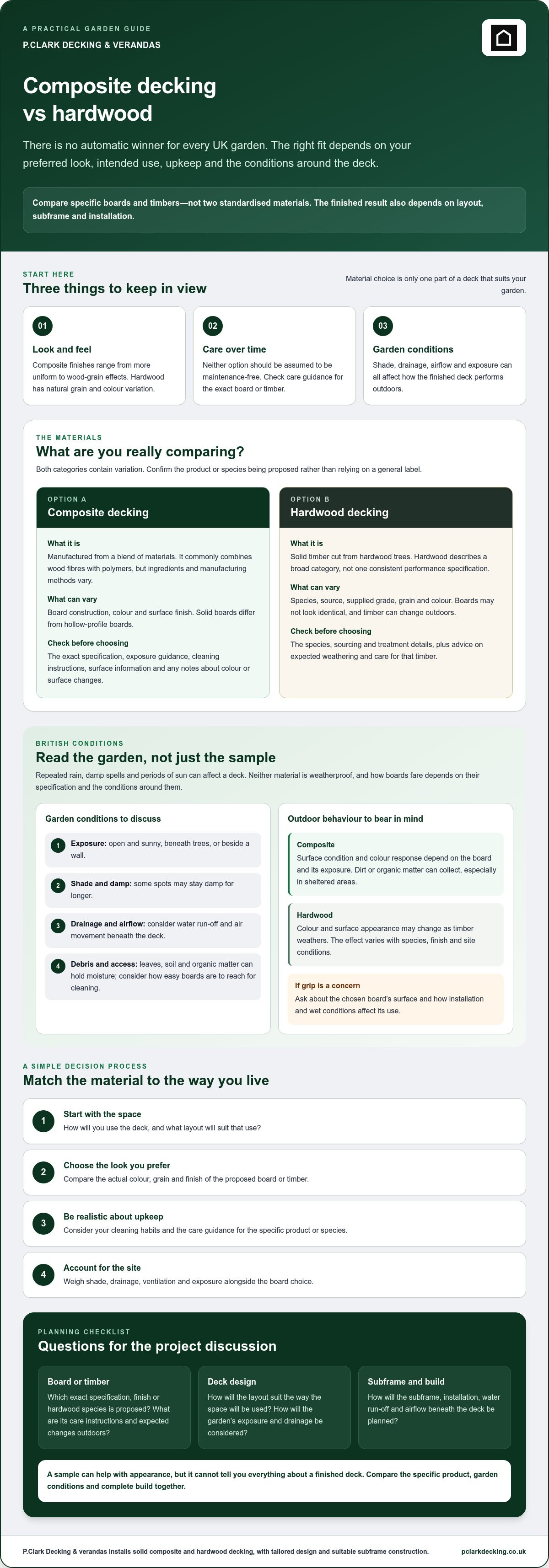
How to Choose Between Composite and Hardwood for Your Deck
A good choice starts with how you want the deck to look and what it needs to do, not with a claim that one material suits every garden. Use these steps to narrow down composite decking vs hardwood, then check the board details and proposed build before agreeing a design.
- 1. Decide on the look. If you prefer an even finish and a more consistent colour, explore composite options and check the specific board. If natural grain and variation appeal to you, ask about hardwood choices available for the project.
- 2. Consider your garden’s exposure. Think about where the deck will sit in relation to sun, shade and rain, and whether nearby planting or structures could affect airflow or leave debris. Ask how the proposed layout and subframe account for those conditions.
- 3. Be realistic about everyday use and upkeep. Will the space mainly be used for dining, sitting out or regular access across the garden? Consider how often you’re willing to clean the boards and, for timber, follow care guidance. The finish you want to maintain may affect how much attention feels right.
- 4. Check the actual product specification. Ask for the precise board details, relevant supplier information and care instructions. Look at samples in your garden if available, as colour and texture can appear different outdoors than in a showroom or catalogue.
Questions to settle before agreeing the design
Ask how the selected boards suit the planned use, how they should be cleaned and whether the supplier gives guidance on expected changes in appearance. Check what the proposed subframe is made of and how the design allows for drainage and ventilation. Board layout matters too: discuss which way the boards will run, where edges and steps will sit, and how the finished deck will connect with the house and garden.
These questions keep the material choice tied to the whole project. A board that looks right in isolation still needs to suit the garden’s conditions, the deck’s intended use and the construction beneath it. If an answer is unclear, ask for an explanation before settling on the specification.
P.Clark Decking & verandas installs solid composite and hardwood decking and works with clients on bespoke designs and subframe construction. Discuss your decking design and the material preferences you’re weighing up.
P.Clark Decking & verandas installs solid composite and hardwood decking and works with clients on bespoke designs and subframe construction. Discuss your decking design and the material preferences you’re weighing up.
Plan a Composite or Hardwood Deck with an Experienced Installer
A material decision becomes a buildable plan once the chosen boards, layout and construction details come together. The design needs to reflect the dimensions of the space, how you’ll move through it and the finish you’ve chosen. Confirming these details before work begins gives everyone a shared picture of the project.
Why does the subframe matter whichever boards you choose?
The subframe is part of the finished deck, even though it won’t be visible once the boards are down. Ask how the proposed structure relates to the chosen decking, the site and the intended layout. Establish how the installer will approach edges, changes in level or areas where access may be restricted, so these details are considered as part of the design rather than left as surprises.
Ask what information will be confirmed before installation, including the board specification and agreed layout. A clear plan connects the material choice with how the deck will be built, without assuming one construction detail suits every garden.
What can a bespoke decking conversation cover?
Talk through the practical shape of the project: the area you want to use, access from the house, any awkward corners and the features you’d like the deck to sit alongside. You might want a simple platform for outdoor seating or a layout that makes a particular part of the garden easier to use. These details help the design respond to your space rather than treating the boards as a stand-alone choice.
P.Clark Decking & verandas designs and builds bespoke outdoor spaces, with skilled carpenters and designers working with clients on tailored projects. The team installs solid composite and hardwood decking and has over 21 years of stated industry experience. Share what you want from the space and which material you’re considering to discuss the design and build, even if you haven’t decided every detail.
Make a Choice That Fits Your Garden
The right choice in composite decking vs hardwood comes down to more than the board sample. Think about the look you want, the care you’re comfortable with and how your garden’s conditions could shape the finished space. Check the specific board guidance, then consider how the design and supporting subframe work together.
If you’re still weighing up the options, P.Clark Decking & Verandas installs both solid composite and hardwood decking and creates bespoke outdoor spaces with skilled carpenters and designers. The business states it has over 21 years of industry experience, and can help you consider material preferences as part of planning the whole deck.
Tell us about your decking project and let’s talk through the options. Share what you’d like the space to do, the look you have in mind and any questions about the build. A conversation is a good place to start shaping a deck that feels right for your garden.
Frequently Asked Questions
Is composite decking better than hardwood?
Neither is automatically better. It depends on the look you want, your garden and the upkeep you’re comfortable with. Composite offers a manufactured finish that varies by board, whilst hardwood has natural timber grain and variation. Compare the exact products, their care instructions and suitability for your garden’s exposure. The best choice is the one that fits how you plan to use the deck.
Does composite decking look like real wood?
Some composite boards have wood-like colours and textured finishes, but the resemblance varies by product. Others have a more uniform, clearly manufactured appearance. Hardwood has natural grain and variation between boards, which composite finishes may not reproduce exactly. If appearance matters, view samples outdoors and compare their colour and texture with your house and garden before choosing a specification.
Does hardwood decking need more maintenance than composite?
Hardwood often needs more attention to its finish, but the exact routine depends on the species, exposure and look you want to maintain. Composite still needs cleaning. It isn’t maintenance-free, and dirt or organic growth can collect on its surface. Check the supplier’s instructions for both options, including suitable cleaning methods and whether the timber needs a protective treatment.
Is composite decking slippery when wet?
There isn’t one answer for every composite board. Underfoot grip can depend on the board’s surface texture, the way it’s installed and conditions on the deck, including water, dirt or organic growth. Don’t rely on the word “composite” as proof that a surface is slip-resistant. Ask for product-specific information and consider how drainage and cleaning will be handled.
Can hardwood decking be left untreated?
Some owners choose to let hardwood weather naturally, but untreated timber may change colour and surface appearance outdoors. Whether that suits you depends on the species, its exposure and your preferred finish. Leaving it untreated doesn’t mean every hardwood will perform alike or need no care. Ask the timber supplier what they recommend for the specific boards and setting.
Which lasts longer, composite decking or hardwood?
There’s no reliable answer based on material category alone. Service life depends on the particular board or timber, product specification, exposure, installation and ongoing care. A well-planned subframe and suitable drainage and ventilation also matter to the finished deck. Ask suppliers for documentation relevant to the exact product, and discuss how the proposed design suits your garden rather than relying on a broad lifespan claim.
How do I choose between composite and hardwood decking for my garden?
Start with the appearance you prefer, then consider sun, shade, rain exposure, how you’ll use the deck and how much cleaning or timber care you’re willing to do. Compare outdoor samples, read the care instructions and ask for the precise board specification. Discuss the layout, subframe, drainage and ventilation with your installer too, so the material choice fits the whole project.

