

What if the boards you choose aren’t the biggest factor in how your deck turns out? A solid composite decking installer’s preparation, subframe work and attention to detail matter just as much as the finish in project photos. Pictures and confident sales claims alone won’t tell you how a builder plans the job or handles the work beneath the boards.
Before you compare quotes, know what questions to ask and what evidence to look for. This guide explains how to assess an installer’s relevant experience, discuss your design and material choices, and understand what should be included in the project scope. It also explains how planning and construction fit together, including the role of the subframe, so you can prepare for your first project discussion. P.Clark Decking & verandas offers bespoke design and CAD drawings, giving you a starting point to discuss the design and build together.
Key Takeaways
- Look beyond finished-deck photos and ask for examples of relevant solid composite decking work.
- Compare how each solid composite decking installer approaches design, written project scope and communication.
- Discuss site levels, drainage, access and how you plan to use the space before the build is planned.
- Gather a rough layout and note access constraints and existing garden features before requesting a project discussion.
- Ask how bespoke design and CAD drawings could help you picture the proposed deck before work starts.
What should a solid composite decking installer actually do?
A solid composite decking installer plans and builds a deck around the site and your requirements. That involves more than laying boards. The design, supporting structure, access and intended use all need consideration before construction begins. Solid composite decking is the material choice, but the whole build affects how well the finished deck works.
Composite decking is generally made from a combination of materials. For a straightforward introduction to what composite decking is, consider the material separately from the work involved in installing it.
A competent installer should be able to explain how the design, supporting structure and boards will work together on your site.
What is included in a bespoke decking installation?
Start by discussing what you want the space to do. Will it be used mainly for outdoor dining, somewhere to sit, or as an extension of a busy family area? Your answers can shape the layout. Access to the garden and existing features may also affect how the build is planned.
Design, material selection and construction are connected. The layout needs to suit the space and the boards under consideration, while the supporting structure needs to be planned as part of the design. Ask the installer how these choices fit together and what the written scope includes. Each site and brief is different, so don’t assume every project follows the same specification.
A design discussion may include drawings to help you picture the proposed arrangement. P.Clark Decking & verandas offers bespoke solid composite decking and CAD designs, with carpenters and designers involved in tailored projects.
Why experience with solid composite decking matters
General building experience doesn’t necessarily show how an installer approaches this particular material. Ask to see examples of completed solid composite decking work where available, then discuss what those projects reveal about the process, not just the finished appearance.
Useful questions include: how will the board layout suit the shape of the deck, and how will the supporting structure be planned for the site? Look for clear answers that connect the visible finish with the work beneath it. If a detail depends on the selected boards or project design, ask what needs to be confirmed before work starts.
P.Clark Decking & verandas undertakes solid composite decking installation, so its relevant work can provide a starting point for discussing design and construction. Compare that evidence with other installers’ examples and explanations rather than relying on general sales claims.
How solid composite decking is planned, from site visit to finished boards
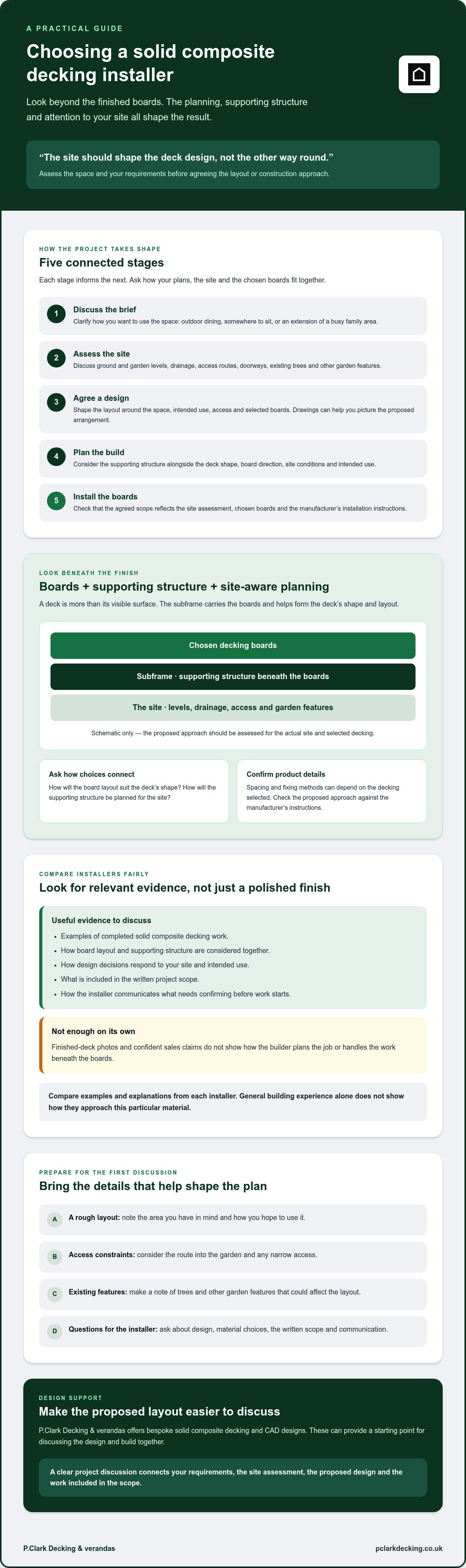
A well-planned deck takes shape in stages: discuss the brief, assess the site, agree a design, plan the build and install the boards. Each stage informs the next. A solid composite decking installer should discuss how your plans fit the space before settling on a layout or construction approach.
The site should shape the deck design, not the other way round. A clear assessment helps identify practical questions before the layout and supporting structure are agreed.
What should an installer assess before designing the deck?
Start with how you want to use the area, then discuss the ground, garden levels and route people will take to reach the deck. A doorway, narrow access, existing trees or other garden features could affect where the deck fits and how materials can be brought into the space.
Levels and drainage need to be considered together. The right approach depends on the actual site, so decisions about the structure or water management should follow a competent assessment rather than guesswork. Ask the installer what they observed and how it affects the proposed design.
How do boards, layout and subframe work together?
The subframe is the supporting structure beneath the boards. It carries them and helps form the deck’s shape and layout, so it needs to be considered alongside the board direction and the site, not as an afterthought. Spacing and fixing methods can depend on the decking selected. Check that the proposed approach follows the manufacturer’s installation instructions.
For a general look at framing and deck construction guidance, the American Wood Council has a useful reference. It’s a US guide, so it shouldn’t be treated as UK building requirements or as a substitute for product-specific instructions. A separate guide to subframe construction can explain the supporting structure in more detail.
Before work begins, make sure the agreed design and scope reflect the site assessment, intended use and chosen boards. P.Clark Decking & verandas offers bespoke solid composite decking and CAD designs, which can make a proposed layout easier to discuss. You can explore its decking and design work as a starting point for your project conversation.
How to compare solid composite decking installers fairly
Comparing installers is easier when you look beyond polished photos and sales claims. Pictures can show the finish, but not how the site was assessed, how the design was agreed or what supporting work sits beneath the deck. Ask each installer for the same kinds of evidence, then compare their answers with the written proposal.
| What to compare | What to look for |
|---|---|
| Relevant projects | Examples of completed solid composite decking work, where available, and an explanation of what made those projects comparable to yours. |
| Design process | How the installer gathers your requirements, assesses the site and develops a layout for discussion. |
| Written scope | A description of the agreed design, materials and main construction work, along with any assumptions that may affect the scope. |
| Communication | A clear point of contact, who will carry out the work and how you’ll receive updates as the project progresses. |
What questions should you ask a composite decking installer?
Keep the conversation practical. Ask about experience with solid composite boards and projects with similar requirements. Then ask how the installer assesses a site and develops a proposed layout. You don’t need a technical lecture, but you should be able to follow the reasoning behind the proposal.
It’s also reasonable to ask who’ll do the work and how questions or changes will be communicated. The North American Deck & Railing Association (NADRA) provides deck-industry resources. It’s a US organisation, not a UK accreditation scheme, and it doesn’t replace checking an installer’s own relevant work.
What should you look for in a decking proposal?
A useful proposal should make clear what you’ve agreed: the intended design, the materials being considered and the main work included. Check that it also sets out its assumptions. If the scope depends on what’s found during the site assessment, ask what could change and how any changes would be discussed with you.
Compare proposals by the work they describe, not just the headline figure. A lower quote isn’t automatically better value if key details are unclear or the scope differs. Ask each installer to explain any gaps before you decide. That way, you can compare like with like and understand what you’re agreeing to.
What to prepare before hiring a solid composite decking installer
You don’t need a finished plan before speaking with an installer. A few practical details can help them understand your ideas, identify questions that need a closer look and discuss what the project scope should include.
What information helps an installer understand your project?
Think about who’ll use the deck and how. A space for outdoor meals may need a different layout from one mainly used for relaxing or connecting the house to the garden. A rough sketch, approximate measurements and a few photographs can help explain the space. They don’t need to be professional drawings.
Before you contact a solid composite decking installer, make a note of:
- Intended use: who will use the deck and what you’d like to do there.
- Approximate layout: the area you have in mind, including any preferred shape or position.
- Access constraints: narrow gates, steps or other limits on reaching the garden.
- Existing features: trees, paths, doors or other features that could affect the layout.
- Questions for the builder: what design options are possible, how project stages will be agreed and how updates will be shared.
These notes are a starting point, not a final specification. The installer will need to discuss the site and confirm what the project involves. Ask how design revisions are handled, what needs to be settled at each stage and how the final scope will be recorded before work starts.
How can CAD design help you picture the finished deck?
A drawing can make the proposed shape and its position in relation to the house and garden easier to understand. It may also help you discuss design changes before agreeing to the work. P.Clark Decking & verandas offers CAD designs, but don’t assume drawings or a set number of revisions are included in every project. Ask what will be provided and confirm any design work in the scope.
With your notes ready, you can focus the conversation on the space and the choices that matter to you, rather than trying to remember every detail on the spot. P.Clark Decking & verandas designs and builds bespoke outdoor spaces, including solid composite decking, with a team of carpenters and designers.
Discuss your bespoke decking project and share the details you’ve gathered to start exploring a suitable design and scope.
Choosing P.Clark Decking & verandas for solid composite decking
Once you’ve compared relevant work, the design approach and the written scope, you can judge which builder suits your project. P.Clark Decking & verandas designs and builds bespoke outdoor spaces, including solid composite decking, with a team of skilled carpenters and designers. The business works on domestic and commercial projects.
This means you can discuss design and construction together rather than treating the boards as a standalone choice. As with any solid composite decking installer, confirm what’s included in your particular proposal before agreeing to proceed.
A hands-on team for bespoke decking projects
A bespoke deck starts with your requirements: how you’d like to use the space, the shape you have in mind and how it relates to the garden. P.Clark Decking & verandas works with clients on tailored projects, bringing design and carpentry into the same conversation. CAD designs are available and may help you picture a proposed arrangement. Confirm which drawings and revisions are included in your project.
P.Clark Decking & verandas has over 21 years of industry experience. Ask about the team’s relevant solid composite decking work and how your design will be developed and set out in the agreed scope.
What happens when you enquire about a deck?
A useful first step is a conversation about the site and what you need from the deck. Share your ideas, photographs, approximate layout and practical constraints, such as limited access or existing garden features. These details help frame the discussion, but the project requirements and scope still need to be confirmed with the team.
Before deciding, ask what the next project stages involve, how the proposed design will be agreed and what the written scope covers. Check whether CAD drawings or design changes are part of your proposal rather than assuming they apply to every job.
If you’re ready to talk through your plans, discuss a bespoke decking project with P.Clark Decking & verandas. Bring your questions and a few details about the space so the discussion can focus on what matters to your project.
Choose your builder with confidence
The right solid composite decking installer should explain how your design, site and supporting construction fit together, not just show you attractive boards. Compare relevant project examples and clear written scopes. Then share your intended use, rough layout and any access constraints so the first discussion can cover the practical details.
P.Clark Decking & verandas undertakes solid composite decking installation and bespoke outdoor projects with a team of carpenters and designers. The business has over 21 years of industry experience.
A well-planned deck starts with an open conversation and a shared understanding of what’s included. Bring your ideas and questions, then take time to decide whether the proposed design and scope suit your project. Talk to P.Clark Decking & verandas about your decking project.
Frequently Asked Questions
What should I look for in a solid composite decking installer?
Look for an installer who can show relevant work and explain how they’ll plan your project, from site assessment to installation. Ask how they’ll develop the layout, consider the supporting structure and confirm the selected boards’ installation requirements. The written proposal should make the design, materials and main work scope clear, including any assumptions. You should also know who’ll carry out the work and how project updates will be handled.
Is solid composite decking suitable for every garden?
No. The right choice depends on your garden, intended use and proposed design. Levels, ground conditions, drainage, access and existing features can all affect what’s practical. A site discussion can help establish whether the material and layout suit your space or whether the plan needs adjusting. Share any concerns early and ask the installer to explain how the site affects their recommendations before you agree to a design.
How do I know whether a decking installer has relevant experience?
Ask for examples of completed solid composite decking projects, where available, and discuss what made them similar to yours. A photograph can show the finished boards, but it won’t explain how the layout or supporting structure was planned. Ask the installer to talk through their approach and the decisions involved. Clear answers about comparable work are more useful than a broad claim of general building experience.
What happens during a decking site assessment?
A site assessment helps the installer understand the space and practical requirements before settling on a design. Expect to discuss levels, ground conditions, drainage, access, existing garden features and how you plan to use the deck. The installer can consider how these factors may affect the layout and supporting construction. Ask what they observed, which details still need checking and how the findings will be reflected in the proposal.
Can solid composite decking be installed on an existing subframe?
Possibly, but the existing subframe needs to be assessed before anyone confirms it can be used. Its condition, arrangement and compatibility with the selected boards all matter. Check the required fixing method and spacing against the manufacturer’s instructions. Ask the installer what they inspected and whether the frame is suitable for the proposed work. Don’t assume it can be reused simply because it’s already in place.
How long does solid composite decking installation take?
There isn’t one reliable timescale for every installation. Duration depends on the project’s size and design, site access, the work included and any conditions that affect progress. Ask the installer for an estimated schedule once they understand the site and scope, and check which stages it covers. If the proposal depends on assumptions about the site or materials, ask how a change could affect the planned timings.
What should a solid composite decking quote include?
A clear quote should describe the agreed design, proposed materials and main construction work included. Check that it identifies what’s outside the scope and lists assumptions or site conditions that could change the work required. Ask how design changes will be handled and how adjustments will be agreed. Compare quotes by their stated scope, not just the headline figure, so you can see whether you’re comparing like with like.

