

Choosing between low maintenance decking options UK homeowners commonly consider means weighing more than how often the boards need cleaning. Appearance, how you’ll use the space and the ground beneath it all matter too. The decking that needs the least upkeep may not be the best fit for your garden.
If you’d rather not spend your free time staining or sealing timber, it makes sense to look at alternatives. But low maintenance doesn’t mean no maintenance. In changeable weather, drainage, ventilation and a well-built subframe can be just as important as the surface material.
This guide compares timber, composite, aluminium and PVC decking, with practical points to check about care and suitability. Use it to narrow down the options that fit your routine, preferred look and project, and to prepare useful questions for a decking designer or installer.
Key Takeaways
- Compare low maintenance decking options UK homeowners can choose by care needs, appearance and suitability for your garden.
- Check what routine cleaning each material still needs, and treat claims of maintenance-free decking with care.
- Match your choice to how you’ll use the space, the finish you prefer and the upkeep you’re comfortable with.
- Ask suppliers about care instructions, site suitability and how the subframe is included in the design.
- P.Clark Decking & verandas offers bespoke projects in composite, hardwood, softwood, aluminium and PVC decking.
Low maintenance decking options UK: what does “low maintenance” really mean?
You want a deck that looks good without turning weekends into a cycle of scrubbing, sanding and staining. The phrase “low maintenance” can help narrow down the low maintenance decking options UK homeowners consider, but it doesn’t mean you can leave a deck untouched.
Low-maintenance decking needs less frequent or less intensive routine care than some alternatives, but still needs occasional cleaning and attention. What that involves depends on the surface material, how it’s installed, its exposure to shade and moisture, how much use it gets and the manufacturer’s care guidance. Some composite decking uses a blend of wood fibres and plastic, as outlined in this background on Wood-plastic composites (WPCs), but care instructions vary between products.
What jobs count as ordinary decking maintenance?
Everyday care usually starts with sweeping away leaves, grit and other debris, then cleaning dirt from the boards when needed. There’s no single schedule for every deck. A sheltered area may stay clean for longer, while boards beneath trees can collect debris more quickly.
Cleaning is different from material-specific treatment, such as applying a finish to timber, and from dealing with damage. Before using a cleaner, pressure washer, brush or other tool, check the product guidance. The wrong method can affect the surface, and even decking described as low maintenance may have specific care instructions.
Why can the same decking need different levels of care?
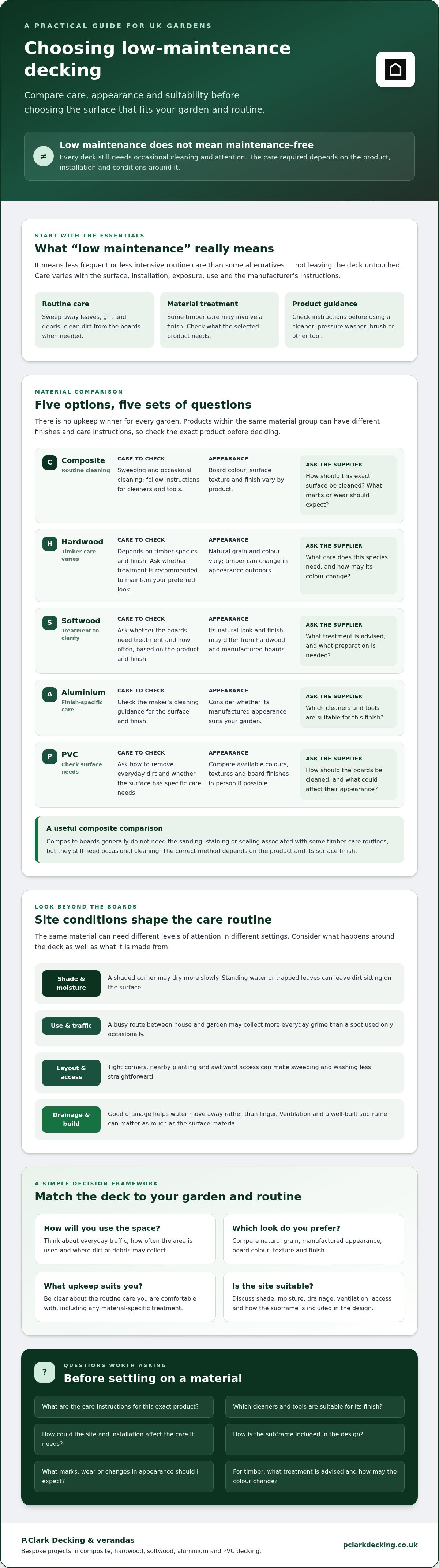
Look at the conditions around the deck, not just the boards. A shaded corner may dry more slowly, while standing water or trapped leaves can leave dirt sitting on the surface. A busy route between the house and garden may collect more everyday grime than a spot used only occasionally.
Layout and drainage matter too. Tight corners, nearby planting and awkward access can make sweeping and washing less straightforward. Good drainage helps water move away rather than linger. Gardens vary in their exposure, shelter and shade, so ask how the site and proposed installation could affect the care the finished deck needs.
Compare low maintenance decking options UK homeowners can choose
There isn’t one upkeep winner for every garden. This comparison highlights care points to check, rather than ranking materials for quality or lifespan. Products within the same material group can have different finishes and instructions, so consult the manufacturer’s guidance for the exact product before deciding.
| Material | Typical care to check | Appearance to consider | Ask the supplier |
|---|---|---|---|
| Composite | Sweeping and occasional cleaning; follow instructions for cleaners and tools. | Board colour, surface texture and finish vary by product. | How should this exact surface be cleaned, and what marks or wear should I expect? |
| Hardwood | Care depends on the timber species and any finish. Check whether treatment is recommended to maintain the look you want. | Natural grain and colour vary, and timber can change in appearance outdoors. | What care does this species need, and how may its colour change? |
| Softwood | Ask whether the boards need treatment and how often, based on the product and finish. | Its natural look and finish may differ from hardwood and manufactured boards. | What treatment is advised, and what preparation is needed? |
| Aluminium | Check the maker’s cleaning guidance for the surface and finish. | Consider whether its manufactured appearance suits your garden. | Which cleaners and tools are suitable for this finish? |
| PVC | Ask how to remove everyday dirt and whether the surface has any specific care needs. | Compare available colours, textures and board finishes in person if possible. | How should the boards be cleaned, and what could affect their appearance? |
How does composite decking compare for routine upkeep?
Composite boards generally don’t need the sanding, staining or sealing associated with some timber care routines, but they still need occasional cleaning. The right method depends on the product and its surface finish, so ask for the cleaning instructions before you buy. For a wider view of timber decking practice, the Timber Decking and Cladding Association (TDCA) is a useful UK industry reference. A dedicated composite guide can also help you compare board types and finishes in more detail.
What upkeep should you expect from timber, aluminium and PVC?
Timber care isn’t one-size-fits-all. Hardwood and softwood vary by species, treatment and finish, so don’t assume every board needs the same routine. Aluminium and PVC have different surfaces from timber, and their cleaning advice varies too. Ask for written care guidance for the exact material, then compare that routine with the look and feel you want. A deeper composite-versus-hardwood comparison can help you weigh those trade-offs.
Consider the boards alongside the design and subframe, rather than treating them as a stand-alone product. P.Clark Decking & verandas designs and installs composite, hardwood, softwood, aluminium and PVC decking. You can explore bespoke decking design and installation while weighing up what suits your garden and maintenance routine.
Are low maintenance decking options UK gardens use really maintenance-free?
No. Reduced upkeep doesn’t mean no upkeep. Even boards that don’t need routine staining or sealing can collect dirt, leaves and other debris. Their care needs depend on the product and the conditions around it. Treat “maintenance-free” as a claim to question, not a promise that the deck will never need attention.
When comparing low maintenance decking options UK homeowners are considering, separate the everyday cleaning routine from claims about treatments, colour retention or resistance to marks. Ask what the wording actually covers and look for the product’s written care guidance. The Timber Decking and Cladding Association (TDCA) is a useful UK reference for timber decking information, though the manufacturer is the right source for care advice on a specific product.
Which “maintenance-free” claims deserve a closer look?
Ask the supplier to be specific. Does “maintenance-free” mean no staining or sealing, or are they also claiming that the surface won’t need cleaning or attention? What should you expect in terms of colour change, marks and wear? Broad labels don’t answer these questions, and no material should be assumed immune to dirt or garden conditions.
Get the care instructions in writing before you commit. Check which cleaners and tools are suitable, what routine care is recommended, and whether any treatment is advised to keep the finish looking as you expect. If the answers rely only on a general sales phrase, ask for product-specific guidance.
Can low-maintenance decking still change in appearance?
Yes. Appearance can vary with the product, surface finish, setting and how the deck is used. A sample can help you judge colour and texture, but ask whether it represents the exact product and finish being proposed. Also ask how the manufacturer describes changes you might see outdoors, rather than relying on a broad promise about lasting appearance.
Site conditions matter. Poor drainage can leave water standing, while leaves or other debris trapped in corners may make cleaning harder. Think about where water runs, how easily you can reach the edges and whether nearby planting drops material onto the boards. Discuss these details as part of the design, not after installation.
Before choosing, ask:
- What does “maintenance-free” mean for this exact product?
- What cleaning is recommended, and which products or tools should I avoid?
- Is any treatment advised, and how might the finish look different outdoors?
- How will the design deal with drainage, shade and areas where debris could collect?
- Can I see a relevant sample and read the current manufacturer care guidance?
Clear answers make it easier to compare materials honestly and choose a deck whose real upkeep suits your routine.
How to choose low maintenance decking for your garden and routine
Finding the board that sounds easiest to care for is only part of the decision. The right fit also depends on how you’ll use the space, the look and feel you want, your budget and the conditions on site.
Choose decking by defining how you’ll use it, selecting an appearance, assessing the upkeep, checking the garden and comparing product guidance.
- Define how you’ll use the deck. Decide whether it’s mainly for dining, relaxing or regular trips between the house and garden. A busy route may need more frequent cleaning than a quieter seating area, and the surface should suit its intended use.
- Choose the appearance and feel. Compare timber, composite, aluminium and PVC for colour, texture and finish. If possible, look at relevant samples in natural light and consider how each surface feels underfoot. A lower-care choice still needs to look right beside your home.
- Be honest about upkeep. Decide how much sweeping, washing or material-specific care you’re willing to do. Ask for written guidance for the exact product instead of relying on general claims about a material.
- Check the garden and access. Look at shade, surrounding planting, where water drains and whether you can easily reach the edges to clean them. Consider levels and how the supporting structure will work with the site.
- Compare the details before deciding. Weigh product guidance, appearance, feel and intended use together. Ask what the proposed design and installation include so you can compare like with like.
What should you check about the garden before choosing decking?
Walk the area after rain if you can, and notice where water collects or runs off. Check how much shade the deck will get, whether leaves may gather and how people will move between the house, deck and garden. Ask how the design accounts for levels, drainage, access and the supporting structure. A dedicated subframe guide can offer more detail on this part of the project.
What should you ask a decking installer before work begins?
Ask for the product’s current written care instructions and any relevant product information. Clarify which materials, design work, subframe construction and installation are included in the proposal. Check how the planned structure suits the site, how drainage will be handled and whether access affects the layout or work. Clear answers help you understand both the finished deck and the upkeep it may need.
P.Clark Decking & verandas designs and installs composite, hardwood, softwood, aluminium and PVC decking, with subframe construction and CAD designs available as part of the wider project offering. Share how you plan to use the space and what level of care suits your routine, then discuss your decking design and installation.
Plan a bespoke low maintenance decking project with P.Clark Decking & verandas
Once you’ve narrowed down the low maintenance decking options UK that suit your routine, the next step is to fit your choice to the garden and the way you want to use it. A deck is more than its surface boards. Material, layout and supporting structure all need to work together, with the right decisions depending on the product and site.
How can a bespoke design account for upkeep and everyday use?
Start by explaining what the space is for: outdoor dining, a place to sit or a route between the house and garden. Be clear about the care you’re comfortable with, the appearance you prefer and anything on site that could affect the design, such as shade, levels or access.
P.Clark Decking & verandas designs and installs solid composite, hardwood, softwood, aluminium and PVC decking. Considering the material alongside the layout and subframe helps make the proposal specific to your project, rather than treating the boards as a stand-alone choice. CAD designs are also available as part of the wider offering. Care needs will still depend on the selected product and site conditions, so ask for the current manufacturer guidance before deciding.
What information helps start a decking conversation?
You don’t need every detail settled before you enquire. A few practical notes can help the team understand what you have in mind and focus the discussion:
- Approximate dimensions of the area, even if they’re not final measurements.
- How you expect to use the deck and how many areas or levels you’re considering.
- Materials and finishes you’re drawn to, along with the care routine you’d prefer.
- Photographs of the garden, showing access, levels, nearby planting and any areas where water tends to collect.
- Questions about the proposed design, decking material, subframe construction and what the installation includes.
Before approving a project, ask for a clear scope, including which design and installation elements are included and how the supporting structure suits the site. This gives you a sound basis for comparing options without assuming every product or garden needs the same approach.
P.Clark Decking & verandas reports more than 21 years of industry experience and offers bespoke decking design and installation across these materials. If you’re ready to discuss your garden, get in touch about a bespoke decking project.
Make a confident choice for your garden
The right low maintenance decking options UK homeowners choose aren’t simply the boards that appear to need the least care. Think about the look and feel you want, how you’ll use the space and the cleaning routine you’re happy to take on. Low maintenance still means occasional attention, and the product guidance is the best place to check what that involves.
Consider the whole project too. Site conditions, layout, drainage and the supporting structure all help shape a deck that suits your garden. P.Clark Decking & verandas reports more than 21 years of industry experience, with bespoke design and installation across composite, hardwood, softwood, aluminium and PVC decking. CAD designs and subframe construction are also available as part of the wider project offering.
Share your ideas, intended use and preferred upkeep, and talk to us about a decking project that suits your garden and routine. With the right questions and a design shaped around your space, you can move ahead with a choice that feels right for your home.
Frequently Asked Questions
What is the lowest maintenance decking material in the UK?
There isn’t one material that needs the least care in every garden. Composite, aluminium and PVC decking may suit people looking to avoid regular timber treatments, but each product has its own cleaning guidance. Compare specific products rather than relying on the material name alone, and consider the surface finish, garden conditions and how you’ll use the deck. Ask suppliers what routine care they recommend.
Is composite decking maintenance-free?
No. Composite decking can reduce the need for treatments such as staining or sealing, but it still needs attention. Dirt, leaves and other debris may need sweeping or washing away, and the suitable cleaning method depends on the product’s surface finish. Check the manufacturer’s current instructions before using cleaners or tools, and ask what the guidance says about marks, wear and changes in appearance.
Does low maintenance decking need cleaning?
Yes. Low-maintenance decking still needs occasional cleaning to remove everyday dirt and debris. How often depends on the setting: a deck beneath trees may gather leaves, while a more exposed area may collect different kinds of dirt. Sweep as needed and follow the product’s cleaning instructions for washing. Don’t assume a cleaner or tool is suitable just because it works on another decking material.
Can timber decking be a low maintenance option?
It can be, but the care routine depends on the timber species, treatment, finish and appearance you want to maintain. Hardwood and softwood aren’t uniform categories, so don’t assume all boards need the same treatment or schedule. Ask the supplier what’s recommended for the exact timber, whether a finish is needed and how the boards may look as they weather. Check those details against the manufacturer’s guidance.
How do I choose decking that needs less upkeep?
Start by comparing the written care guidance for the specific products you’re considering. Then weigh that routine against the look and feel you want, how you’ll use the space and your garden’s shade, drainage and access. The best low maintenance decking options UK homeowners choose aren’t necessarily identical: a material that suits one site or routine may not suit another. Ask suppliers to explain the upkeep in practical terms.
Does the subframe affect decking maintenance?
Yes. The supporting structure and how the deck is designed for its site can affect how well water drains and whether debris becomes difficult to clear. Ask how the proposed subframe suits the garden’s levels, access and drainage, and what materials are specified. Surface boards aren’t the whole project. A clear explanation of the supporting structure helps you understand how the deck is planned, as well as how to care for its visible finish.

